Earn Money From Your Phone: 7 Ways That Actually Pay in 2026
Most “make money on your phone” posts run the same math: scan a receipt, get three cents, do that four thousand times and technically you’re rich. I wanted to know what the real number actually looked like, so along the way , I found a few categories that barely anyone’s covering.
Earning money from your phone in 2026 falls into four honest buckets: small recurring cash for stuff you’re already doing, apps that pay you for quick digital tasks in your spare time, real hourly pay for gig work, and content you build once that keeps paying you back. The first bucket won’t replace a paycheck. The second is low-pressure, but the money is modest. The third can replace real income, if you put in the hours. The fourth is the one I actually build around now.
Here’s what actually earns money, and what I’d skip entirely.
1. Scan receipts for small cashback (Fetch)

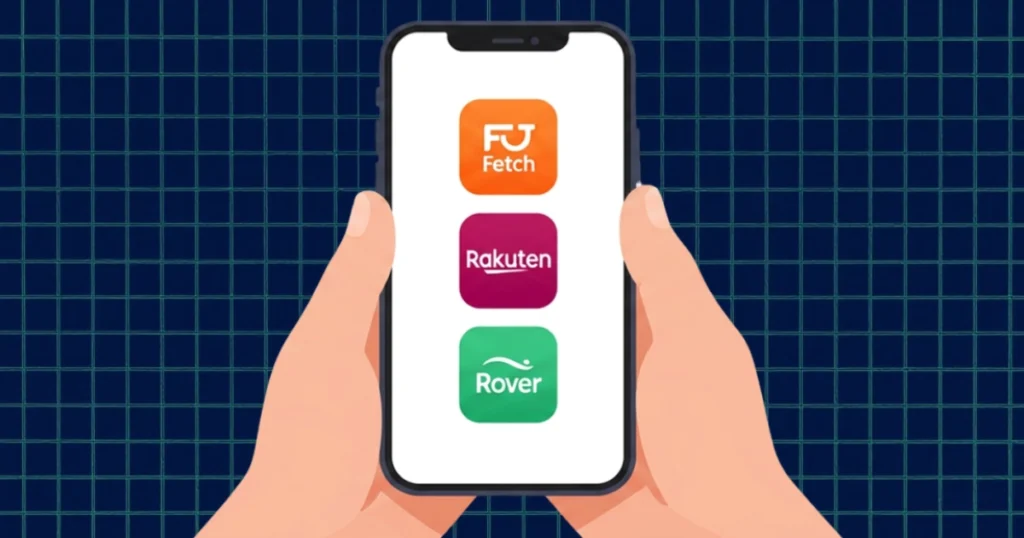
Fetch pays you points for scanning receipts — about 25 points per receipt, roughly $0.03. You need close to 5,000 points for a $5 gift card, which in practice means somewhere around 200 receipts unless you’re catching bonus offers. It’s free to use and never asks for card or bank info. Real people on Reddit’s r/beermoney report $50–200 a month stacking apps like this casually, and $400–600 for people who treat it like a part-time job — not “quit your job” money, but not nothing either.
One I’d skip: the passive “data sharing” apps that pay you $5–10 a month just to run in the background collecting your browsing and location data. The payout is genuinely too small for what you’re handing over. If a company wants your location history, it should cost more than a coffee.
2. Get cashback on spending you’re already doing (Rakuten)

Rakuten works differently from Fetch — it’s a cashback portal that pays 1% to 20%+ when you shop through its app or browser extension before checking out. No receipts, no scanning. The catch: it pays out quarterly, not on demand, and you have to remember to activate it before you buy anything, or you get nothing.
Neither this nor Fetch is a side hustle. They’re a way to not leave money on the table for spending you were already going to do.
3. Pet sitting and dog walking (Rover)

This one’s real, not a maybe. Rover connects pet owners with sitters and walkers nearby — you set your own rates, and once you’re booked, you get paid. Multiple independent sources put typical earnings at $15–50 an hour depending on the service, with dog walking on the lower end and overnight boarding paying more per booking. Money lands in your account by direct deposit within two days of finishing a job.
The catch: Rover takes a 20% cut of what you charge (higher in some states once combined fees are counted), and you’ll need to pass a background check and build up a few reviews before bookings get consistent — your first few weeks will be slower than your fifth month. It’s genuinely built around a phone, too: you manage bookings, messages, and check-ins entirely from the app, no laptop involved.
This isn’t worth it if: you don’t actually like being around other people’s pets, or your building doesn’t allow animals if you want to offer boarding. But if you do, this is one of the few things on this list where the income is real and repeatable, not speculative
4. Survey and GPT apps: why I stopped bothering

Survey apps and “get-paid-to” (GPT) platforms — think the Swagbucks category — pay you in points for watching videos, testing products, and answering surveys. They’re free, they’re legitimate, and they will not make you meaningful money.
I’m not going to pretend otherwise: free is almost never free. These apps are free to download, sure, but the actual price is your time, and the exchange rate is bad. Most people land in that same $50–200-a-month range as the cashback apps, for noticeably more effort — surveys can take 15–20 minutes and disqualify you halfway through.
If you’ve got genuine dead time (waiting rooms, commutes on a train, not driving) and zero interest in anything more involved, fine, download one. But you don’t need five of these installed. You need zero, or one.
5. Sell what’s already in your closet (Poshmark)

This one surprised me with how straightforward it was. Poshmark lets you list clothes, shoes, and accessories for free — you only pay when something actually sells: 20% commission on sales of $15 or more, or a flat $2.95 under $15. That’s on the higher end compared to other resale apps, but it includes payment processing and a prepaid shipping label, so there’s nothing else to calculate.
The math is simple enough to do in your head: sell a $50 jacket, keep $40. Sell ten things a month at $30 average, you’re looking at roughly $240 after fees. That’s the closet you’re not using anyway, turned into actual cash, no inventory to buy first.
This isn’t worth it if: you don’t already own sellable stuff, or you hate photographing and describing things. It’s a decluttering hustle, not a sourcing-and-flipping business — that’s a different (and much more time-intensive) game.
6. Delivery gigs: the one that actually pays real money (DoorDash)

If you want your phone to generate real, hourly income and not just gift-card money, this is the category. Doordash is the most accessible one to start: you need to be (18, 19 in thirteen states, including Colorado, Texas, and Florida), a smartphone, a valid license and insurance if you’re driving a car, and you’ll pass a background check that typically clears in three to seven days.
Multiple independent sources cite a blended average of $20–25 an hour combining base pay, tips, and promotions, though that swings a lot by market and time of day — lunch and dinner rushes pay noticeably better than a slow Tuesday afternoon. There’s no vehicle-age requirement, and you can deliver by bike or scooter in a lot of cities if you don’t want to put miles on a car.
The con, and it’s a real one: you’re an independent contractor, so nobody withholds taxes for you, and you’re covering your own gas, insurance, and wear on your car. Set aside 25–30% of what you make for taxes, or the spring will be an unpleasant surprise.
7. AI-powered content: faceless YouTube videos

This is the one I actually build around — make something once with AI tools, then let it keep working after you post it.
Faceless YouTube channels have no face and no recorded voice of your own, which solves the actual problem , if you’re an introvert like me. Write the script in Chatgpt, generate the voiceover with Capcut’s built-in AI text-to-speech (it runs right in the app, no separate recording setup), and edit the whole thing together in the same app. None of it requires showing up on camera or owning a microphone.
The honest catch: YouTube doesn’t pay out immediately. Full ad revenue needs 1,000 subscribers and 4,000 watch hours in 12 months, or 10 million Shorts views in 90 days — there’s a lower entry tier at 500 subscribers that unlocks tipping features, but not ad revenue. That’s realistically months of consistent uploading before this pays anything.
If you’re a college student looking to start a side hustle, I’ve written about that specifically — side hustles for college students that actually pay covers eight of them in more detail.
This is slower to pay off than a Doordash shift. It might be weeks or months before it earns anything. But unlike scanning receipts, it doesn’t reset every month — a video you make today can still be earning views next year. That compounding is the real difference between money for stuff you’re already doing and a system you’re building.
What I’d do if I were starting today
One project, one distribution channel, and patience. That’s genuinely it. I wouldn’t download four cashback apps on day one — I’d pick Rakuten for spending I’m already doing, and put the real effort into the faceless YouTube channel if I wanted something that compounds, or DoorDash if I wanted real hourly money starting this week. Rover’s income is just as real, but it takes longer to ramp up before the bookings get consistent.
The apps aren’t a scam. They’re just not a strategy. Pick the thing that compounds.
FAQ
Can you really make money from your phone, or is it all a scam? It’s real, but the range is wide. Cashback and survey apps genuinely pay out — just modestly, usually $50–200 a month for casual use. Gig work like delivery pays real hourly wages. Neither is a scam; they’re just different scales of “worth it.”
What’s the easiest way to earn money on my phone with zero experience? Cashback apps like Rakuten and receipt apps like Fetch have the lowest barrier — no application, no interview, no skills needed. They’re also the lowest-paying option, so treat them as a starting point, not the whole plan.
How much can I realistically make from cashback and survey apps? Based on real user reports, not marketing claims: most casual users land around $50–200 a month combining a few apps. Heavier users hit $400–600. Anyone promising more than that from these specific apps is exaggerating.
Is dog walking or pet sitting on Rover actually worth it?
Yes, if you like animals and live somewhere with real demand — the pay ($15–50/hr) is well documented across independent sources, not just platform marketing. The catch is a slow start: new sitters need a few completed bookings and reviews before jobs get consistent.
Do I need to show my face or record my own voice to start a YouTube channel? No. Faceless channels are a real, common format — write the script in ChatGPT and generate the voiceover with a tool like CapCut’s AI text-to-speech. What you do need is patience: full monetization takes 1,000 subscribers and 4,000 watch hours before it pays anything.
What’s the fastest way to actually make money from my phone today? Delivery gig work like DoorDash pays out fastest — you can be approved and earning within about a week, sometimes days, and see money the same day you drive. Everything else on this list is slower by design.
Pick one. Actually use it. The rest can stay in the app store.